Our 6-Step Burst Pipe Restoration Process in Kent, WA — From Call to Rebuild
Last updated: October 2026
Six phases from the first call to final reconstruction. Every step follows the IICRC S500 standard, and every step is documented for your insurance carrier.
What does the burst pipe restoration process involve?

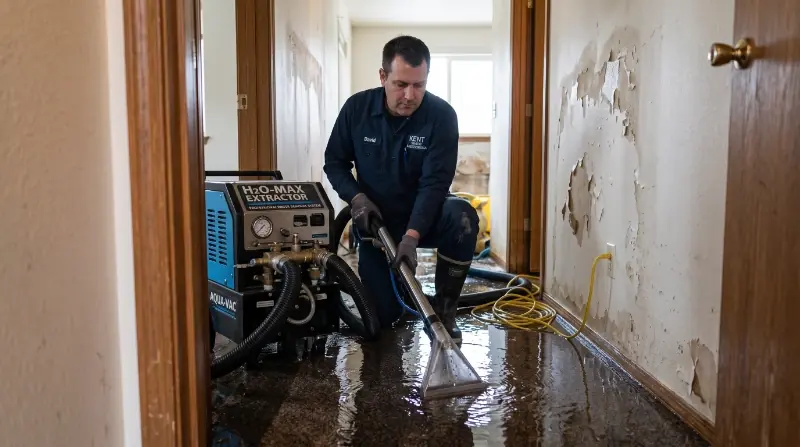
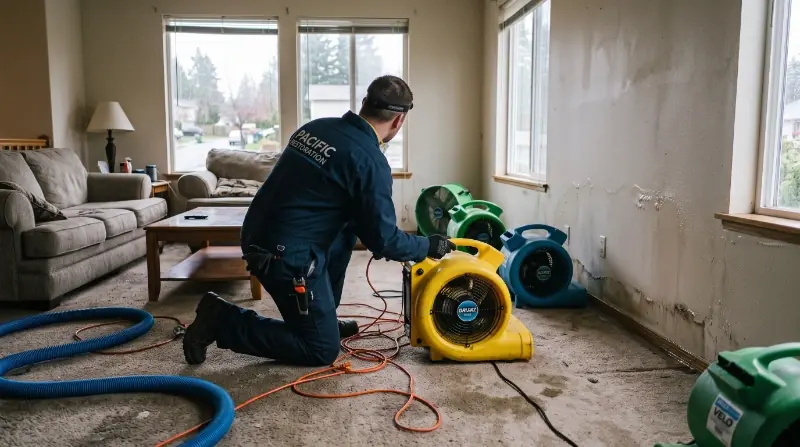
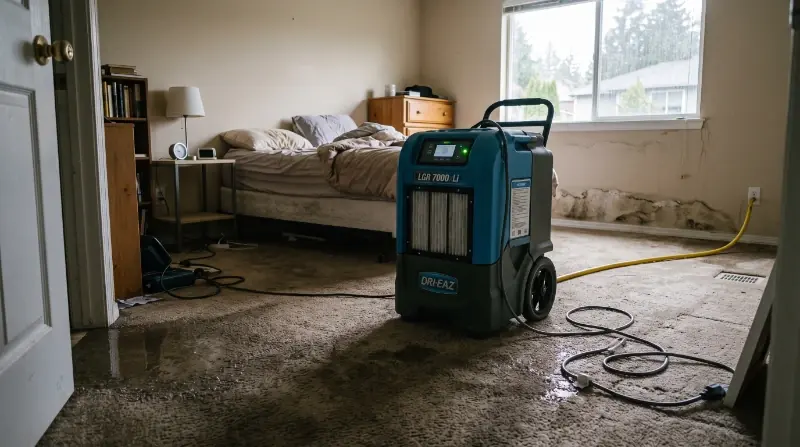
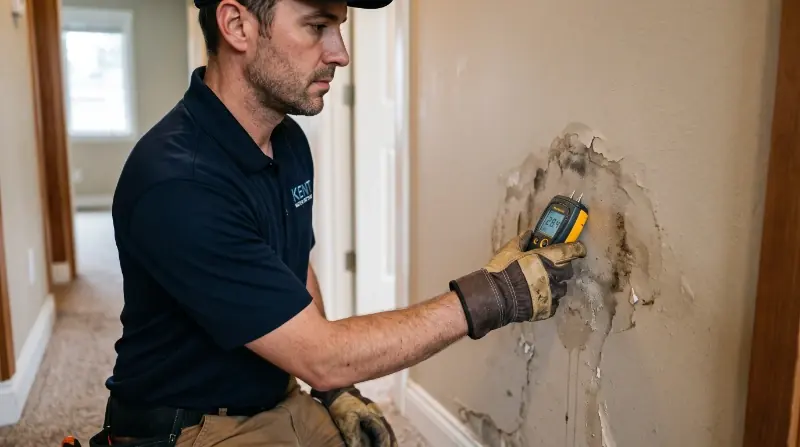

Burst pipe restoration in Kent, WA follows six phases: emergency response within 60 minutes, water extraction using truck-mounted pumps, moisture mapping with thermal imaging, structural drying using commercial LGR dehumidifiers and air movers for 3 to 5 days per IICRC S500 standards, full damage documentation for your insurance carrier, and reconstruction. Total timeline for a typical single-room loss is 3 to 7 days. Multi-room or subfloor losses take 7 to 21 days.
Why does the restoration process matter as much as response time?
A lot of companies compete on response time. We compete on what happens after the crew arrives. Getting a truck there in 60 minutes means nothing if the drying equipment is undersized, the moisture mapping is skipped, or the documentation is so thin that your insurance adjuster rejects half the scope.
The IICRC S500 standard, which is the technical foundation for professional water damage restoration, defines what properly documented drying looks like. Insurance carriers use it. Courts have used it in coverage disputes. It is not optional for a legitimate restoration job. Every step below follows that standard.
Step 1 — What happens in the first 60 minutes?
You call. Someone picks up. We ask a few fast questions: Is the water still running? Do you know where the main shutoff is? Is there standing water near electrical outlets or appliances? These questions help us know what equipment to prioritize and whether we need to talk you through any immediate safety steps before the crew arrives.
The contractor's truck rolls within minutes of the call. The contractor arrives with extraction equipment, dehumidifiers, air movers, a thermal camera, and moisture meters on every emergency dispatch. The crew does not need to return to a warehouse to pick up gear. Everything comes on the first truck.
Response time across all Kent ZIP codes, including East Hill in 98030, West Hill in 98032, the Kent Valley in 98032, and the Lake Meridian area in 98042, is 60 minutes or less. If you are in Downtown Kent near Kent Station or the ShoWare Center area, we are often faster.
What to Do While You Wait
Turn off the main water supply if you have not already. In most Kent homes built before 1990, the shutoff valve is at the water meter near the street or in the garage. Turn it clockwise until it stops. Then turn on a faucet at the lowest point in the house to drain remaining pressure from the lines.
Do not use electrical switches in rooms with standing water. If the water level is above any electrical outlet, panel, or appliance, stay out of that area until the crew arrives and assesses the situation.
If you cannot find the main shutoff, the City of Kent Public Works department can be reached at 253-856-5600. You can also call us back and we will walk through shutoff locations by home type and construction era on the phone.
Step 2 — How is standing water extracted?
Once the crew assesses the scene, extraction begins immediately. Contractors in our network use truck-mounted extraction systems that move far more water per minute than portable units. For crawlspaces, finished basements, or spaces with limited access, they deploy submersible pumps and portable extraction units designed for confined spaces.
A burst pipe releasing 4 to 8 gallons per minute can put hundreds of gallons into a home before the water is shut off. That water does not stay on the surface. It moves into subfloor assemblies, wall cavities, cabinet bases, and anywhere else gravity and capillary action take it. Extraction removes the bulk. Structural drying handles what the pumps cannot reach.
We do not leave after extraction. The drying equipment goes in the same day, often before the extraction is completely finished.
Step 3 — How is hidden moisture found?
This is the step most homeowners never see happening and never know was skipped until six months later when the mold shows up.
Water migration in a building does not follow straight lines. It travels through walls along wood grain, pools in low spots of subfloors, saturates insulation horizontally for several feet from the obvious wet area, and collects in cabinet bases and closet floors well outside the room where the pipe failed. Thermal imaging cameras detect temperature differentials that indicate wet materials even when the surface looks and feels dry. Penetrating moisture meters confirm readings at depth.
We create a moisture map that documents every affected area with readings, photographs, and room diagrams. This map becomes part of the insurance documentation package and tells the crew exactly where to place drying equipment and where walls may need to be opened for access.
Step 4 — How long does structural drying take?
Commercial low-grain refrigerant (LGR) dehumidifiers and high-velocity air movers run continuously from the day of the loss until the structure reaches pre-loss moisture baselines. This is not the same as running a shop fan for a day and calling it dry.
The IICRC S500 standard defines drying completion based on psychrometric measurements, not visual appearance or touch. The crew measures temperature, relative humidity, and material moisture content daily. Readings are logged with timestamps and provided to your insurance adjuster as part of the claim documentation.
For most single-room burst pipe losses in Kent, this phase runs 3 to 5 days. Homes with hardwood subfloors, plaster walls, or dense materials like concrete take longer. Kent homes built before 1980, which used heavier wood framing and denser insulation in many cases, sometimes require 5 to 7 days even for moderate losses.
Why the IICRC S500 Timeline Matters for Your Insurance Claim
Insurance carriers and their adjusters are trained to look for IICRC-compliant documentation. If your restoration company cannot produce daily moisture logs showing progressive drying from wet to dry standard, the carrier may question whether the work was complete and may reduce or dispute the claim scope. We produce that documentation as a standard part of every job.
Step 5 — What does the insurer receive?
While drying equipment runs, we prepare the insurance documentation package. This includes photographs of all affected areas taken before, during, and after remediation. It includes moisture readings with timestamps, equipment placement logs, a line-by-line estimate of all materials to be repaired or replaced, and a written scope narrative explaining what happened and why each line item is necessary.
Under Washington State insurance rules, a carrier cannot dictate which restoration company you hire. The Washington State Office of the Insurance Commissioner enforces this at insurance.wa.gov. Our documentation meets the same Xactimate format used by every major carrier — so switching away from a preferred vendor list costs you nothing in claim quality. We submit documentation directly to your adjuster and respond to any questions or requests for additional information.
If your carrier attempts to reduce the scope in ways that do not accurately reflect the actual damage, we can provide additional documentation, arrange for an independent inspection, or refer you to a public adjuster who specializes in Washington State property claims.
Step 6 — How long does reconstruction take?
Once the structure reaches dry standard and the insurance scope is approved, reconstruction begins. We repair or replace damaged drywall, insulation, flooring, trim, cabinets, and any other materials that were removed during the mitigation phase or were damaged beyond drying.
For pipe repairs themselves, we coordinate with licensed Washington State plumbers. If the plumbing repair has not been completed before the restoration crew arrives, the crew works alongside the plumber and sequences its work so both trades can complete their scope without conflict.
Our goal is to return your home to the condition it was in before the pipe failed. We do not consider the job done until you have reviewed the completed work and confirmed it meets that standard.
Common questions about the restoration process
How long does structural drying take after a burst pipe in Kent, WA?
Structural drying after a burst pipe in Kent typically takes 3 to 5 days using commercial LGR dehumidifiers and high-velocity air movers. Larger losses or homes with hardwood flooring or plaster walls may need 5 to 7 days. We follow IICRC S500 standards and check moisture readings daily before closing walls or beginning reconstruction.
When can mold start growing after a burst pipe in Kent?
Mold can begin growing in porous building materials within 24 to 48 hours of water exposure under favorable temperature and humidity conditions, per EPA guidance on indoor mold. Kent's Pacific Northwest climate provides those conditions most of the year. Fast extraction and drying directly determines whether materials can be saved or must be removed.
Do I need to be home during the drying process?
You do not need to be home for daily monitoring. We schedule check-ins at a time that works for you, or we can provide key-coded access for monitoring visits. We communicate every moisture reading by phone, text, or email, whichever you prefer. You are never left wondering what stage the job is at.
What happens if my insurance carrier disputes the scope?
We provide all supporting documentation including moisture logs, photographs, equipment records, and industry standard references. If the dispute continues, we can arrange a third-party inspection or refer you to a public adjuster familiar with Washington State homeowner policies. Washington State law gives you rights in this process that many homeowners do not know they have.
Pipe Burst in Kent Right Now?
Call (831) 230-1431On-site in 60 minutes. 24/7. All Kent ZIP codes.
Back to Homepage | More Questions Answered | Insurance Billing Info
Burst Pipe in Kent Right Now?
Your call routes directly to a licensed local contractor. On-site in 60 minutes across all Kent ZIP codes.
(831) 230-14311819 Central Ave S, Kent, WA 98032 · Serving 98030 · 98031 · 98032 · 98042 · Work performed by licensed, insured, IICRC-certified contractors