Frozen Pipe Burst Auburn WA: Winter Prep, Thawing and Cleanup
Published October 19, 2026 · Updated October 2026 · 10 min read · By the WA Restore Pro editorial team
Auburn doesn't freeze often, but when it does, crawlspaces, garages and manufactured homes take the hit. Here's how to prepare, thaw safely, and what to do if a pipe splits.
Burst pipe in Auburn? Shut off the main, then call. Your call routes to a licensed local restoration contractor.
A frozen pipe burst Auburn WA homeowners discover usually shows up during the thaw, not at the coldest hour, because ice holds the split closed until it melts. Prevent it by sealing crawlspace vents, disconnecting hoses and keeping heat at 55°F or higher. If a line has already split, close the main shutoff and call (831) 230-1431. The call goes to a Washington-licensed restoration contractor in our network, and Auburn arrivals are targeted inside an hour.
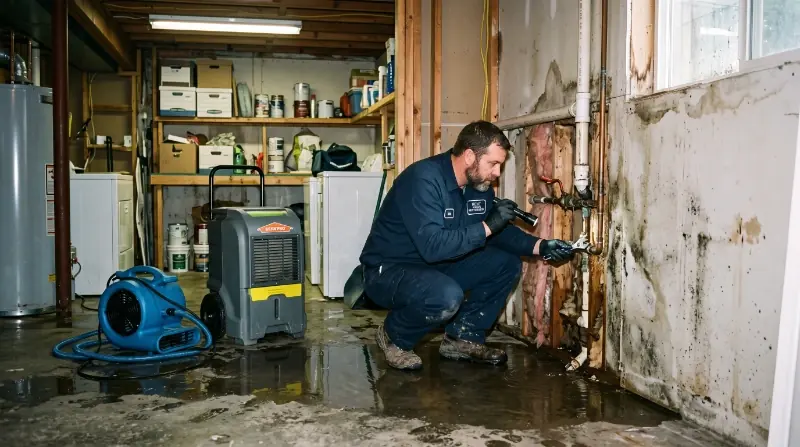
How cold does Auburn actually get?
Auburn rarely sees a hard freeze, but when one arrives it can drop into the teens. The closest official station, Sea-Tac Airport, has recorded lows from the mid-teens to 20°F in recent cold snaps.
Auburn doesn't have its own National Weather Service station, so the figures in this table are Sea-Tac Airport readings. Treat them as a regional benchmark, not a reading from your backyard.
| Cold snap | What Sea-Tac recorded | Why it mattered for pipes |
|---|---|---|
| February 2019 | 14.1 inches of snow in the first ten days, a record for February; lows of 20°F on Feb 5 and 6; coldest February in 30 years | Snow cover and repeated nights below freezing kept crawlspaces and garages cold for days |
| December 26–27, 2021 | Record lows of 20°F, then 17°F | A holiday freeze, when many families were traveling and homes sat with the thermostat turned down |
| January 12–13, 2024 | High of only 25°F on Jan 12, a record low maximum | Pipes never got a daytime break to warm up; a burst pipe surge hit the whole region |
That January 2024 freeze is the best recent example of what happens when it finally thaws. Even the airport's baggage claim area took water from broken pipes, and over that long weekend Seattle's fire department logged something like 175 calls for broken pipes. In neighboring Kent, residents of the Kentwood Apartments went more than a day without water, and on the Eastside one fire agency logged 312 water line breaks in 12 hours. We didn't find Auburn-specific counts in news coverage, but Auburn homes are built the same way and sit in the same weather.
Does it freeze harder on the valley floor or on Lea Hill?
There's no local data proving either one is consistently colder. On clear, still nights, cold air tends to sink into low ground, so the valley floor can be just as cold as the hills, or colder.
Downtown Auburn sits at about 92 feet; Lea Hill reaches about 417. People tend to assume the hill is colder, and on a windy night an exposed house can lose heat faster. But the classic Puget Sound freeze is a calm, clear night after an arctic air mass moves in, and that's when cold air pools in the Green and White River valleys. The useful takeaway: don't decide your house is safe because of where it sits. Decide based on how the plumbing is laid out.
Valley floor homes (much of 98001 and 98002)
Older homes here often sit on vented crawlspaces with supply lines hanging under the floor joists. The crawlspace is the coldest part of the house, and a vent left open on the windward side lets freezing air blow straight across copper or galvanized pipe. Manufactured homes, which are common in 98002, have their lines under the floor inside the belly wrap, protected only by skirting and sometimes heat tape.
Plateau homes (Lea Hill and Lakeland Hills, ZIP 98092)
Most of these houses went up in the 1990s and 2000s. The danger spots are attached garages where the main or the laundry lines run, bonus rooms over garages, and hose bibs on outside walls. PEX tolerates freezing better than rigid pipe, but its fittings don't, and CPVC simply cracks.
Freeze prep for Auburn homes, from the five-day forecast to the first hard night
Start preparing as soon as the forecast shows lows in the low 20s. Most of this costs little or nothing and takes under an hour.
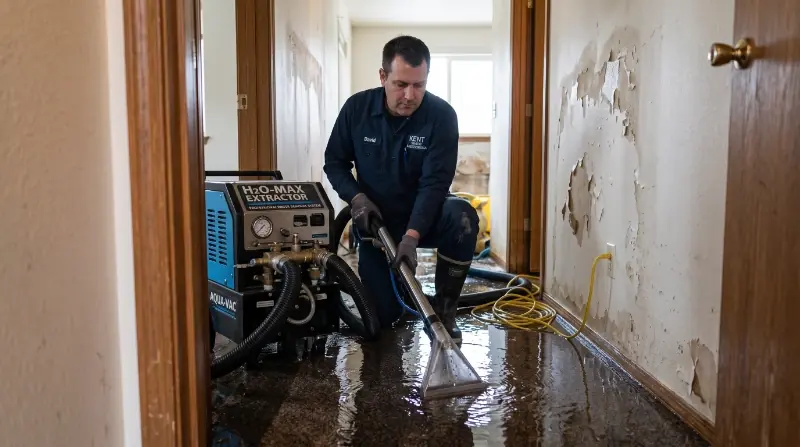
Five days out: find your shutoff and test it
Locate the main shutoff valve and turn it closed and open once. Gate valves that haven't moved in years can seize or break, and you want to learn that now, not with water spraying. On many plateau homes it's in the garage; in older valley homes it may be in the crawlspace, a utility closet or under the kitchen sink. Know where the meter box is too.
Three days out: close up the crawlspace
Fit foam vent covers or cut rigid foam board to plug foundation vents. Check that pipe insulation under the house is still on the pipe rather than hanging off it. If you have a manufactured home, walk the skirting and patch gaps, and plug in or test the heat tape on the water riser.
Two days out: deal with the outside
Disconnect every garden hose. A frost-free sillcock only works if it can drain, and a connected hose traps water inside the long stem where it freezes behind the wall. Add an insulated faucet cover. If you have an older hose bib with an interior shutoff, close it and open the outside spigot to drain the line.
The night before: heat and airflow
Keep the thermostat at 55°F or above, even if you'll be away. Open the cabinet doors under sinks on outside walls so house heat can reach the pipes. Close the garage door. If a bathroom or laundry sits over the garage, leave its door open.
During the cold: a slow drip on risky lines
On the coldest nights, let a thin stream run from a faucet fed by a pipe you know is exposed. Moving water is harder to freeze, and an open faucet relieves the pressure that builds between an ice plug and a closed valve, which is what actually splits pipe.
Leaving town over the holidays? Shut off the main and drain the lines by opening the lowest faucet, and ask someone to check the house daily. Many homeowners policies limit coverage for freeze damage when a home is vacant and the owner didn't keep heat on or drain the system.
What are the signs a pipe has frozen?
The clearest sign is a faucet that gives a trickle or nothing at all while others in the house work normally. Frost on an exposed pipe, a bulge in the line, or a toilet that won't refill are others.
Catching ice early is the cheapest way to avoid a frozen pipe burst Auburn WA homeowners end up paying a deductible on. Check the faucets one by one, starting with those on outside walls and over the garage. Then trace the supply path back toward the main. A section that feels much colder than the rest, or that has frost on it, is the likely blockage. Keep in mind that a frozen pipe often hasn't burst yet. If you can thaw it slowly, you may avoid a leak entirely.
Thawing a frozen line without making it worse
Thaw slowly with gentle heat, starting from the faucet end and working back, with the faucet open so meltwater and steam can escape.
- Use: a hair dryer, a heat gun on low held well away from plastic, warm towels, or a space heater set a safe distance from anything flammable.
- Never use: an open flame or propane torch. It can ignite framing in a crawlspace, and boiling water inside a confined pipe can rupture it.
- Keep the main valve nearby. As the ice melts, a hidden split may start spraying. Have someone stand ready at the shutoff.
- Watch the walls and ceiling for 24 hours after water comes back. A slow drip inside a wall may not show for a while.
- Call a plumber if you can't reach the frozen section or the pipe is inside a finished wall or ceiling.
Frozen pipe repair in Auburn: what the fix looks like
Frozen pipe repair in Auburn usually means a plumber cuts out the split section and splices in new pipe, typically for $150 to $600 for a simple repair.
How the plumber does it depends on the material. Split copper gets cut out and replaced, either soldered or joined with a push-fit SharkBite coupling. Cracked CPVC is cut and solvent-welded with new fittings. PEX that has ballooned or a fitting that cracked gets a new crimp or expansion connection. A burst frost-free sillcock is usually replaced as a whole unit, since the break is inside the long stem in the wall. Galvanized steel lines that froze and split are often a sign the system is near the end of its life. If the plumber finds the pipe on each side of the split is heavily corroded, ask whether it's time for a repipe rather than another patch. Plumbing repair is done by a licensed plumber, and many contractors in our network can coordinate one for you.
The thaw floods the house: what restoration has to do
When a frozen pipe bursts and floods rooms, the restoration crew's job is to remove water fast, find everywhere it went, and dry it to measured readings before mold can start, usually within 24 to 48 hours.
A frozen pipe burst Auburn WA crews get called to is often worse than other leaks because freeze breaks happen in the hardest-to-see places: inside an exterior wall, above a garage ceiling, in the crawlspace under a bedroom. A crack of an eighth of an inch in a pressurized line can release a lot of water before anyone notices. The contractor brings extractors to pull standing water, a thermal imaging camera and moisture meters to map what's wet behind finished surfaces, and LGR dehumidifiers with air movers for drying. Drywall and wet insulation in exterior walls are often removed with a flood cut so the cavity can dry. Exposed framing gets antimicrobial treatment. In a crawlspace, wet insulation comes down and the vapor barrier is replaced if water pooled on it.
What a good thaw-day visit looks like
After a regional freeze, phone lines jam the morning the ice lets go. When you call, a real person should answer, take your address and tell you honestly how busy the crews are, and the contractor should text an ETA instead of leaving you guessing. On site, the technician should walk you through the readings from the wet wall and a dry one nearby, explain why the bottom of an exterior wall needs a flood cut, and put down floor protection on the way in. Ask them to document everything with photos before anything is cut; the split section of pipe and those pictures are what your insurer's adjuster will ask for first. Expect no scare tactics and no upsell into a mold remediation the meter doesn't support. Asking for a second opinion on a plan that seems out of scale with the damage is reasonable, and a confident contractor won't argue.
The process is laid out on our IICRC drying process page, and water extraction covers the first hours.
Will insurance pay for a frozen pipe burst in Auburn?
Usually yes, if the burst was sudden and you kept reasonable heat in the house. Most homeowners policies treat it as sudden and accidental water damage, minus your deductible.
The common exceptions are a vacant home left without heat while the plumbing stayed full and pressurized, and long-term leaks that were ignored. The policy normally covers the water damage and opening walls to reach the pipe; the pipe repair itself may or may not be covered. Take photos and video before cleanup, keep the split section of pipe, and save receipts for anything you buy. If an insurer drags its feet, Washington's claim rules give you leverage: WAC 284-30-370 covers how fast an investigation must move, WAC 284-30-380 covers settlement standards, 284-30-330 lists unfair practices, and you can file a complaint with the state Office of the Insurance Commissioner. Our burst pipe insurance page explains direct billing, and the insurance claim walkthrough goes deeper.
Auburn homes that freeze first
Some houses have a much higher chance of a freeze burst than others. If yours is on this list, give it extra attention before a cold snap:
- Manufactured homes in south and southeast Auburn, with lines under the floor protected by skirting and heat tape.
- Pre-1960 houses near downtown with galvanized or early copper running through vented crawlspaces.
- 1990s and 2000s homes on Lea Hill and Lakeland Hills with laundry and main lines in an attached garage.
- Rentals between tenants and homes for sale, where the heat may be off and nobody is checking daily.
- Houses with a bonus room over the garage, where supply lines pass through a cold floor.
For more on Auburn housing by area, see our downtown and south Auburn 98002 page, the Lea Hill plateau page and the west Auburn 98001 page.
More winter help nearby
If you're in Kent, our Kent winter burst pipe page and frozen pipe burst in Kent guide apply to the same weather. For Auburn as a whole, start at the Auburn burst pipe restoration page, and for every city in the network, check the King County coverage map. Our South King County burst pipe restoration service is based in Kent. And if you're reading this with water coming through the ceiling after a frozen pipe burst in Auburn, WA, close the main and call (831) 230-1431 now.
Auburn Frozen Pipe Repair Questions
At how many degrees should I start worrying about pipes in Auburn?
Start paying attention when the forecast shows overnight lows in the low 20s, especially several nights in a row or a daytime high below freezing. Sea-Tac, the nearest official station, reached 17°F in December 2021 and a 25°F high in January 2024. Exposed pipes in crawlspaces, garages and outside walls are at risk at those levels.
Why do pipes burst in an Auburn freeze, and should I leave a faucet dripping?
Pipes split from pressure that builds between an ice blockage and a closed faucet, so yes, drip the faucets fed by exposed or vulnerable lines. A slow, steady stream keeps water moving and, more importantly, relieves that pressure. You don't need to drip every faucet, only those on outside walls, over the garage, or with lines in the crawlspace.
My pipes froze but nothing leaked once they thawed. Could a hidden crack still be leaking?
It could, so keep checking for 24 to 48 hours. A small crack can seep slowly inside a wall or ceiling before any stain appears. Watch your water meter with every fixture off: if the dial still moves, there is a leak somewhere. Look under sinks, along baseboards and in the crawlspace for damp spots.
Does a frost-free hose bib really prevent freezing?
Only if the hose is disconnected. A frost-free sillcock closes the water deep inside the warm wall and drains the long stem when you turn it off. A connected hose keeps water trapped in that stem, where it freezes and splits the valve behind the siding. You often find out in spring when you first turn the hose on.
Is it safe to thaw a crawlspace pipe yourself with a space heater in Auburn?
Only with care. Keep it well away from insulation, wood framing and the vapor barrier, and never leave it unattended. A hair dryer or heat gun on low is usually safer for a short pipe section. Never use an open flame or torch under a house. If the frozen pipe is hard to reach, call a plumber.
Do manufactured homes in Auburn need extra freeze protection?
Yes. Their water lines sit beneath the home, shielded by little more than skirting, the bottom board and, often, heat tape where the riser comes out of the ground. Before winter, patch skirting gaps, repair torn belly wrap, and test the heat tape. Find the main shutoff, usually where the line rises from the ground, so you can close it quickly if a line splits.
How long does drying take after a frozen pipe burst in an exterior wall?
Usually three to five days for drywall and framing once the wet material is removed and dehumidifiers are running. Cold weather can slow drying in exterior walls and crawlspaces, so the crew may add heat or extra dehumidification. The equipment leaves once the wall cavities test the same as untouched framing, whatever day that turns out to be.
Related Pages
Water Coming Through in Auburn Right Now?
Call (831) 230-143124 hours a day · Licensed, insured, IICRC-certified contractors · Insurance documentation from the first visit