Crawlspace Flooding in Kent, WA — Causes, Coverage & Fast Response
Last updated: October 2026
Crawlspace flooding in Kent, WA is caused by pipe bursts, groundwater intrusion, foundation vent entry, or drain line failures. The Kent Valley (ZIP 98032) sits on the Green River floodplain — the highest crawlspace flood risk in Kent. Pipe burst-caused crawlspace flooding is covered by standard homeowner insurance. Groundwater intrusion requires FEMA flood insurance. WA Restore Pro routes your call to a contractor who responds within 60 minutes with submersible pumps and truck-mounted extractors. Call (831) 230-1431 — 24/7.
When a burst pipe causes crawlspace flooding, the contractors in our Kent burst pipe restoration network use submersible pumps and commercial drying equipment to return the space to S500 standard.
Why do Kent crawlspaces flood?
Crawlspace flooding in Kent differs significantly from other parts of Washington state because of the combination of aging housing stock, the Green River floodplain, and Kent's Pacific Northwest precipitation patterns. Understanding which cause you are dealing with determines both the remediation approach and which insurance policy covers the damage.
Cause 1 — Burst Pipe in the Crawlspace (most common, covered by homeowner insurance)
Galvanized steel and CPVC supply lines run through crawlspaces in Kent homes built before 1990. These pipes are now 35 to 80 years old — well past rated service life — and are the most common source of crawlspace flooding in ZIP codes 98030, 98031, and 98032. A burst pipe in the crawlspace is covered as a sudden and accidental loss under standard homeowner insurance. A single supply line in a crawlspace at normal pressure discharges 4 to 8 gallons per minute — a crawlspace under 1,500 square feet can accumulate 2 to 4 inches of standing water in under an hour from one failed line.
Cause 2 — Groundwater Intrusion from High Water Table (requires flood insurance, not homeowner)
The Kent Valley (ZIP 98032) sits on the Green River floodplain, where the water table can rise to within inches of the surface during heavy precipitation or Howard Hanson Dam releases. This groundwater infiltrates crawlspaces through soil, foundation cracks, and vents without a pipe failure. This is a flood event covered by FEMA National Flood Insurance Program (NFIP), not standard homeowner insurance. Many Kent Valley homeowners discovered this gap in coverage during the December 2025 flooding event.
Cause 3 — Foundation Vent Water Entry (may be covered depending on cause)
Crawlspace foundation vents are required for moisture management but become water entry points during heavy rainfall if the grade around the foundation does not direct water away from the vents. During high-intensity Pacific Northwest rain events, wind-driven water can enter through vents and accumulate on the crawlspace floor. Coverage depends on whether this is classified as surface water intrusion (typically not covered) or wind-driven rain (may be covered under windstorm provisions).
Cause 4 — Drain Line Failure in Crawlspace
Cast iron or ABS drain lines running through crawlspaces in older Kent homes can crack, separate at joints, or develop root intrusions that cause drain water to discharge into the crawlspace. Drain water carries Category 2 (gray water) or Category 3 (black water) contamination depending on the source. This requires a different remediation protocol — not just extraction and drying, but sanitation and IICRC S520 procedures for contaminated materials.
Which Kent neighborhoods have the highest crawlspace flood risk?
Green River floodplain. High water table year-round, rising further during dam releases. Crawlspace flooding from both groundwater intrusion AND burst pipes. Many homes carry FEMA flood zone designation. Howard Hanson Dam flood guide →
Elevated terrain above floodplain. Crawlspace flooding caused primarily by burst galvanized and CPVC supply lines. Covered by standard homeowner insurance. Higher water pressure from elevation accelerates pipe wear.
West Hill (ZIP 98032) — Moderate RiskHillside drainage can create surface water issues around crawlspace vents during heavy rain. Pipe burst risk from aging galvanized systems. Covered by standard homeowner insurance for pipe failures.
Panther Lake & Lake Meridian (ZIP 98031 & 98042) — Lower RiskNot on the floodplain. Local drainage well-managed in most areas. Primary crawlspace risk is aging CPVC supply lines in 1975–2000 homes.
How is a flooded crawlspace dried out in Kent?
Crawlspace flooding requires specialized equipment that standard water damage restoration companies often do not carry. Contractors in the network carry crawlspace-specific equipment for Kent market response.
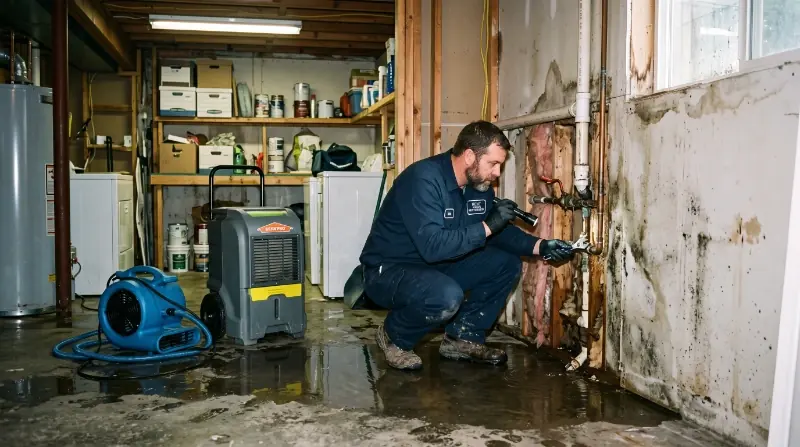
Cause determination and safety check
We determine whether the flooding source is a burst pipe (homeowner insurance), groundwater intrusion (flood insurance), or drain line failure (Category 2/3 protocol required) before any equipment is placed. This determines the documentation path for your claim.
Submersible pump deployment
1,800 gallon-per-hour submersible pumps remove standing water from the crawlspace. A 1,500 sq ft crawlspace with 3 inches of standing water contains approximately 2,800 gallons — pumped clear in under 2 hours.
Truck-mounted extraction
After pumping, truck-mounted extraction removes absorbed water from soil, insulation, and subfloor underside — areas the submersible pump cannot reach.
Crawlspace structural drying
LGR dehumidifiers placed in the crawlspace run until moisture meter readings in subfloor framing return to pre-loss baseline. In Kent crawlspaces during wet season, this typically takes 5 to 7 days.
Insurance documentation
Daily moisture logs, photos, cause documentation, and Xactimate-format scope prepared for your adjuster. For dual-cause events (pipe burst AND groundwater intrusion), we prepare separate documentation for each coverage source.
Crawlspace Flooding FAQs — Kent, WA
What causes crawlspace flooding in Kent, WA homes?
The four primary causes are: burst pipes (galvanized or CPVC supply lines in crawlspaces of pre-1990 homes); groundwater intrusion from the high water table in the Kent Valley floodplain; foundation vent water entry during heavy rain; and drain line failures. Each has different coverage implications and different remediation protocols.
Does homeowner insurance cover crawlspace flooding in Kent?
It depends on the cause. A burst pipe in the crawlspace is covered as a sudden and accidental loss. Groundwater intrusion from the rising water table requires FEMA flood insurance. The contractor assesses the cause on arrival, documents each separately, and advises on which carrier to contact for each scope.
How much does crawlspace flooding restoration cost in Kent, WA?
Crawlspace flooding restoration costs typically run $2,500 to $8,000 for a standard single-story Kent home, depending on the volume of water, size of the crawlspace, and materials affected. When caused by a burst pipe, this is covered by standard homeowner insurance beyond your deductible. We provide a written estimate before work begins, formatted for direct submission to your carrier.
Crawlspace Flooding in Kent Right Now?
60-minute response across all Kent ZIP codes with submersible pumps and truck-mounted extraction. 24 hours a day.
(831) 230-1431Related Kent burst pipe pages
Sources referenced on this page
- King County — Green River flood warning system
- FEMA Flood Map Service Center — Kent, WA
- EPA — Mold cleanup in your home
- IICRC S500
Last updated: October 20, 2026. Reviewed against the City of Kent Water Quality Report and IICRC S500 standard.