Commercial Burst Pipe Tukwila Playbook for Shops, Warehouses and Hotels
Published October 19, 2026 · Updated October 2026 · 10 min read · By the WA Restore Pro editorial team
A pipe that breaks after closing can run all night. Here's how Tukwila owners and managers can stop the water, protect stock, deal with sprinkler lines and get business interruption claims right.
Burst pipe in Tukwila? Shut off the main, then call. Your call routes to a licensed local restoration contractor.
A commercial burst pipe Tukwila business owners face is rarely just a plumbing problem. It's lost sales, wet inventory, a tenant on the phone and sometimes a fire sprinkler system out of service. Stop the water at the building's main or the fixture valve, never at a sprinkler riser unless your fire protection contractor tells you to, then call (831) 230-1431. We route the job to a licensed, insured restoration contractor that handles commercial drying in the Tukwila area.
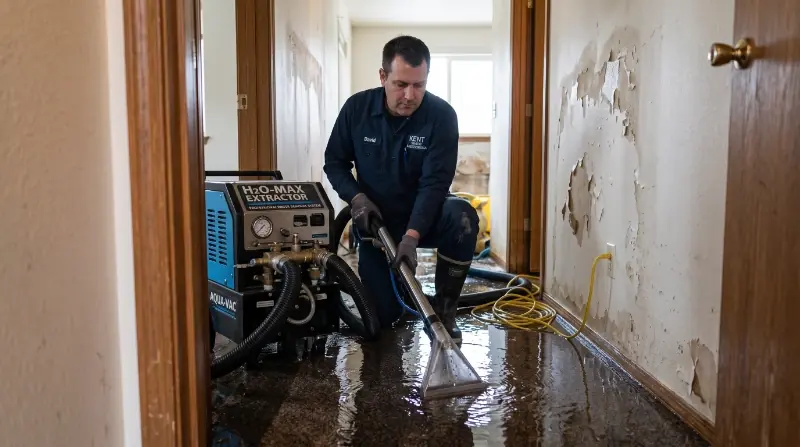
Tukwila punches far above its population in commercial floor space. Westfield Southcenter opened in July 1968 with 116 stores on 30 acres, and it is often described as Puget Sound's largest shopping complex. Warehouses and industrial buildings line the Green River valley and East Marginal Way, Boeing runs several facilities in the city, and hotels and apartment buildings cluster along Tukwila International Blvd near the Link station. Every one of those buildings has pipes in places nobody looks at on a normal Tuesday.
This guide is for owners, property managers and store managers. It covers what to do the moment water shows up, why so many business leaks get found the next morning, what makes sprinkler breaks different, and how business interruption coverage actually behaves. For our general service write-up on the Kent side of the valley, see commercial burst pipe cleanup in Kent; this page sticks to Tukwila.
What should a Tukwila business do in the first 30 minutes after a pipe breaks?
Protect people, stop the water at the right valve, kill power to wet areas, and start photographing before anything moves. Then call restoration and your insurance agent.
1. Clear the area and check electrical
Water running near a sales floor's floor outlets, a warehouse battery charging station or a hotel laundry is the real hazard. If you can reach the panel from a dry spot, shut off the affected circuits. If not, keep everyone out until an electrician or the restoration crew arrives.
2. Find the right shutoff
Domestic water and fire sprinkler water usually enter a commercial building separately. A split line in a break room or restroom gets shut off at its fixture stop or the domestic main. A broken sprinkler head or branch line is controlled at the sprinkler riser, and closing that valve takes fire protection offline for the whole zone. Call your fire protection contractor and alarm monitoring company before touching it if at all possible.
3. Record the scene
Shoot wide video of the room, then close-ups of the broken fitting, the water line on walls, and damaged stock with SKU labels visible. Keep the failed part. Insurers sometimes send an origin-and-cause investigator, and a missing fitting makes their job harder and your claim weaker.
4. Move what you can, safely
Pull dry inventory off bottom shelves and away from the wet edge. Lift rolling racks onto blocks. Don't throw anything out yet; damaged goods are evidence until the adjuster says otherwise.
5. Make two calls
Call (831) 230-1431 for water removal and drying, then notify your insurance agent or broker. Tenants should also send written notice to whoever manages the property. Who repairs what depends on your lease.
Why do business pipe breaks in Tukwila so often go unnoticed overnight?
Most commercial space sits empty for 10 to 14 hours a day, and a leak in a back room, ceiling plenum or loading dock can run that whole time with nobody hearing it.
Homeowners usually catch a burst within minutes because someone is home. A shoe store that closes at 9 p.m., a distribution warehouse running one shift, or an office suite on a long weekend doesn't have that luck. A half-inch line can release several gallons a minute. Multiply by a night and you have water under every wall plate in the suite, soaking into carpet tile glue, rolling under racking and wicking up the bottom of gypsum walls.
Cold weather makes it worse. Commercial buildings often drop the thermostat after hours, and warehouse docks, mezzanine restrooms and exterior-wall mop sinks get colder than the sales floor. Local proof came in January 2024. During that cold snap, water from broken lines poured into Sea-Tac Airport's baggage claim area a few miles west of Southcenter, and several schools in the region shut or opened late after their own pipes failed. Big, professionally managed buildings weren't immune.
Clues a slow leak is already running in your space
Not every business loss starts with a flood. Slow leaks leave warnings that staff walk past for weeks. A stockroom ceiling tile picks up a brown water ring or sags in its grid. Carpet tile near a restroom wall lifts and buckles as the adhesive lets go. Paint bubbles along the bottom of a break room wall, vinyl base trim swells, and the back of house starts to smell musty. On tilt-up concrete warehouse walls, white efflorescence can mark where water is moving through. The clearest clue is often the utility statement: a water bill that jumps while hours and headcount stay the same means water is going somewhere. Ask the plumber about acoustic leak detection before walls are opened, and have the restoration crew scan with a thermal imaging camera.
Ways businesses catch leaks sooner
- Flow-based automatic shutoff valves on the domestic main. They learn normal use and close the valve when water runs continuously after hours.
- Wireless leak sensors under water heaters, ice machines, espresso machines, restroom fixtures and in mechanical rooms, set to text more than one person.
- Building automation alerts for low space temperature in docks and stairwells, so someone hears about a heating failure before the pipe does.
- Sprinkler waterflow alarms tied to a monitoring company. These already exist in most sprinklered buildings; confirm the call list is current.
- A walk-through on cold nights, even a quick one by a manager who lives nearby, when temperatures drop into the low 20s.
What's different about a fire sprinkler line break?
Sprinkler water is usually dirtier than tap water, the system has to be restored by a licensed fire protection contractor, and your building may need a fire watch while it's down.
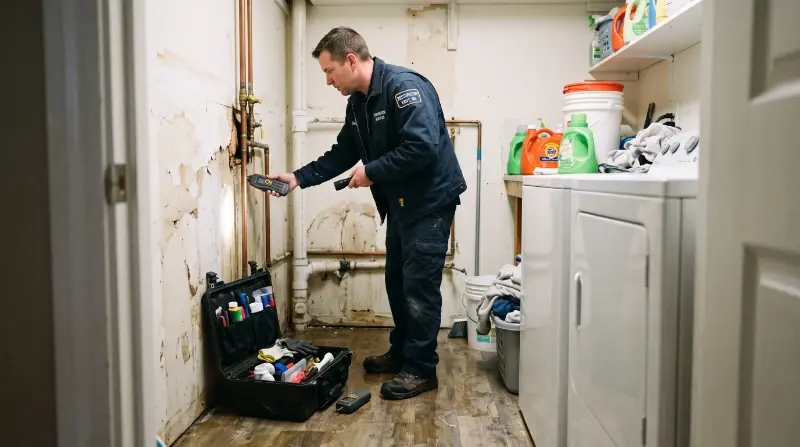
Water sitting in steel sprinkler piping for years turns dark and smells; it often carries rust, scale and bacteria. Restoration crews generally treat it as at least Category 2 water, which means more aggressive cleaning, antimicrobial treatment, and removing porous materials like ceiling tile and carpet pad rather than drying them in place. If it mixes with dirt from a warehouse floor or sits for a couple of days, it can be handled as Category 3.
Two sprinkler designs matter here. A wet-pipe system holds water all the way to the heads, so a branch line running through an unheated space can freeze and split like any other pipe. A dry-pipe system, common in loading docks and unheated warehouses, holds pressurized air instead, but condensation can collect at low points and freeze. When a dry system trips, the release can be fast and heavy. Either way, the restoration contractor dries the building. Only a licensed fire protection sprinkler contractor should repair and recharge the system. Your local fire authority may require a fire watch, where a person patrols the building, until protection is back in service. Ask your fire protection contractor what's required before you reopen.
Does business interruption insurance pay after a burst pipe?
Often yes, when the burst is a covered loss and you actually have business income coverage, but the payment usually starts only after a waiting period and covers income lost during the restoration window.
Business interruption (also called business income) coverage is tied to direct physical damage from a covered cause. A sudden pipe break that shuts down your store generally qualifies. Gradual leaks that went on for months, or damage the policy excludes, do not. Read your declarations page for three things:
- The waiting period. Many policies don't pay the first 72 hours of lost income. Some use 24 or 48. If you reopen in two days, you may collect nothing for income, even with coverage.
- The period of restoration. This is the stretch from the loss until the space should reasonably be repaired. Fast, documented drying shortens it, and adjusters want to see that you didn't drag your feet.
- Extra expense. Costs you pay to stay open, like renting temporary space, overtime, or running a pop-up register in another part of the store, are often covered separately from lost income.
Pull past sales reports for the same weeks last year. The adjuster will compare what you would have earned with what you did earn, and clean records make that a short conversation instead of a long one.
The property side of the claim runs on its own track. Your deductible applies to the physical damage, the carrier may ask for a sworn proof of loss within a set time, and the adjuster will compare the contractor's scope with their own. On a large loss where that gap stays wide, some owners bring in a licensed public adjuster, who represents the policyholder in exchange for a percentage of the settlement.
Leased space: whose policy covers what?
Many Tukwila retail and flex spaces are on triple-net leases. Typically the landlord's property policy covers the building shell and the base plumbing, and the tenant's policy covers inventory, fixtures and the improvements the tenant paid for, such as flooring, built-in counters and wall finishes. Your lease controls the details. Give both carriers the same photos and the same moisture documentation so nobody's estimate leaves a gap. For the insurance basics that apply to any claim in Washington, our claims and direct billing page covers carrier timelines and what to ask the adjuster.
Commercial burst pipe Tukwila risks by type of building
Retail, warehouse, hotel and office buildings fail in different spots, so the right prevention list depends on which one you run.
Retail around Southcenter
Stores lose money from water in two ways: damaged stock and a closed door. Leaks often start in the back of house, at a restroom supply line, a mop sink, a water heater in a storage room, or a drinking fountain line. Ceiling leaks from a tenant upstairs or a rooftop unit's condensate line can stain merchandise on the floor below. Keep a few plastic sheets and a squeegee in the stockroom and know where the domestic shutoff is.
Warehouses and light industrial in the valley
Big boxes have big, cold spaces. Restrooms on mezzanines, eyewash stations, break rooms along exterior walls and sprinkler branch lines near dock doors are the usual freeze points. Concrete slabs hold moisture longer than people expect, and pallets of cardboard soak water like a sponge. Racking legs and anchor bolts should be checked for standing water before stock goes back.
Hotels and apartments along Tukwila International Blvd
Stacked bathrooms mean one bad supply line can drip through three floors. Guest rooms can't be rented while drying equipment runs, so room nights become the business interruption number. Laundry rooms, ice machines and PTAC drain pans are frequent sources. Ask the restoration crew to map moisture in every room under the source, not just the one where the guest complained.
Offices and restaurants
In offices, the risk is wet carpet tile, server closets and paper files. Restaurants deal with health rules on top of drying: a kitchen with water intrusion may need to stay closed until surfaces are cleaned and the space is safe for food service. Your local health inspector is the one who decides that.
Levee water or pipe water: how is the claim sorted?
Water from the Green River or surface flooding is a flood loss and needs commercial flood coverage. Water from your own building's plumbing is a pipe loss under the property policy.
Tukwila businesses got a reminder of that line on December 15, 2025, when a saturated stretch of the Desimone levee gave way along the Green River. Evacuation orders went out to properties on the river's east side across parts of three cities, and city officials later said the flooding was confined to small industrial areas. The broader December storm period later became federal disaster DR-4906-WA, with King County designated for both individual and public assistance. If your building took on river water during that period, the crew's documentation should say so plainly, because a property policy adjuster will deny a flood loss filed as a burst pipe. The reverse also happens: a pipe that cracked during that same cold, wet week is still a pipe claim, and the moisture map should trace water back to the fitting. Our neighbors in Kent deal with the same river; the Howard Hanson Dam flood risk explainer shows how dam storage affects the whole corridor.
How do restoration crews keep a business running while they dry it?
By drying in zones, working around your hours, and setting containment so the rest of the space can stay open.
A good commercial job starts with a moisture map of the whole affected footprint, made with meters and a thermal imaging camera, then a plan the manager can live with. Wet areas get closed off with plastic containment and zip walls. Large, open spaces may get desiccant dehumidifiers, which pull moisture well in cooler air, alongside LGR units and air movers. Equipment draws real power, so the crew will ask which circuits they can use. Noisy setup and demolition can be scheduled before opening or after close.
Expect daily readings in a drying log, photos of each wall opened, and an itemized Xactimate estimate your carrier can match against its own. When readings reach the dry standard under IICRC S500, the crew should issue a completion record. Our structural drying explainer and the six-phase restoration process go deeper on the equipment and the order of work.
Price depends on square footage, water category, how many days equipment runs and how much has to be torn out. Commercial losses are scoped room by room, and big warehouse or multi-suite jobs can run far past typical home figures. Ask for the scope in writing before work goes beyond emergency extraction. A contractor worth keeping will explain each line of it, won't use scare tactics to push a bigger demolition, and won't object if you want a second opinion on a five-figure tear-out.
A pre-loss checklist for Tukwila property managers
Most of the damage in a commercial burst pipe Tukwila managers deal with comes from delay, so the cheapest fix is preparation done in daylight.
- Label the domestic water main, every floor's isolation valves and the sprinkler riser on a one-page map. Laminate it and post it in the mechanical room.
- Write down your fire protection contractor, alarm monitoring company, plumber, insurance broker and the restoration line ((831) 230-1431) on that same page.
- Photograph inventory, fixtures and finishes once a year. It turns a vague contents claim into a list.
- Insulate or heat-trace lines in docks, stairwells and exterior walls, and keep heat on in back rooms during cold snaps.
- Check expansion tanks, PRVs and water heater relief lines during annual maintenance. A failing pressure reducing valve can stress every fixture downstream.
- Read your policy for business income, waiting periods, sprinkler leakage coverage and flood exclusions before you need them.
We arrange restoration across South King County, including burst pipe restoration in Tukwila homes, SeaTac and Renton, from our Kent burst pipe restoration home base. The full list of cities is on the King County service page.
Business water damage questions from Tukwila owners
Is sprinkler leakage covered by a standard commercial property policy?
Many commercial property forms include sprinkler leakage as a covered cause, but some exclude it or limit it, especially for freezing in a building where heat wasn't kept on. Check your form and endorsements with your broker. A system that froze and split during a cold snap usually raises questions about how the building was heated.
Can my Tukwila store stay open while drying equipment runs?
Often, yes, if the wet area can be walled off. Crews set plastic containment around the damaged section, route cords away from walkways and move loud work to off hours. A store with damage across the whole sales floor, or a restaurant kitchen with water intrusion, may need to close until the space is safe.
Who pays when a pipe bursts in a leased retail space?
It depends on the lease. Under many triple-net leases, the landlord insures the building and core plumbing while the tenant insures inventory, fixtures and tenant improvements. Report the loss to both carriers in writing, share the same documentation, and let the lease language decide who repairs which part.
How long does a warehouse slab take to dry after a pipe burst?
Surface water comes up in hours, but concrete can hold moisture for days or weeks depending on thickness, sealers and air conditions. Crews test the slab rather than guessing, and flooring or racking shouldn't go back until readings support it. Rushing this step is how glue failures and mold behind base trim start.
Does business interruption pay if we're closed for only one day?
Probably not for lost income. Many business income policies have a 72-hour waiting period, so short closures fall inside it. Extra expense coverage may still help with costs you paid to keep operating. Read your declarations page or ask your broker for the exact waiting period on your policy.
Our building got water during the December 2025 levee failure. Is that a pipe claim?
No. River water entering the building is a flood loss, which commercial property policies generally exclude. Flood losses are paid only under a separate flood policy, from the NFIP or a private carrier. When a pipe broke on its own during the same storm period, document that source on its own so each loss goes to the right coverage.
Is $600 a normal plumber bill to fix a split line in a Tukwila break room?
Often, yes. Repairing one short section of pipe usually lands between $150 and $600, and most commercial breaks get found after hours or on a weekend, when rates run higher. Commercial work can also add lift rental, ceiling access or a fire watch if sprinkler piping is involved. Get the price before work starts. Drying, containment and replacing wet drywall or carpet tile come from the restoration contractor as a separate bill.
Related Pages
Water Coming Through in Tukwila Right Now?
Call (831) 230-143124 hours a day · Licensed, insured, IICRC-certified contractors · Insurance documentation from the first visit