Frozen Pipe Burst in Kent, WA — Crawlspace, Exterior Wall & Hose Bib Failures
Last updated: October 2026
Frozen pipe bursts in Kent, WA most commonly occur in crawlspace supply lines during overnight temperature drops below 28°F — which happen multiple times each winter in Kent. The burst is covered by standard homeowner insurance as a sudden and accidental loss. WA Restore Pro responds within 60 minutes to all Kent ZIP codes. Call (831) 230-1431 — 24/7. Do not apply direct heat to a frozen pipe before calling.
Frozen pipe bursts are a winter emergency — our Kent burst pipe restoration service responds day or night, including holidays.
Does Kent, WA get cold enough for pipes to freeze?
Kent sits at approximately 60 to 450 feet elevation in the Green River Valley, protected from the worst Cascade cold by surrounding hills. But Kent regularly sees overnight temperatures below 28°F — the threshold at which pipes in unheated spaces begin to freeze — during December through February. The combination of high ambient humidity from the Green River Valley and rapid temperature drops creates conditions where pipes freeze faster than in drier climates, even at the same temperature.
The worst freeze risk in Kent is not during sustained cold snaps, but during rapid overnight drops following warmer days — the freeze-thaw cycling common to Pacific Northwest winters. A crawlspace pipe that survived a two-week cold spell may burst on the first rapid freeze after a mild week, because the pipe wall has been stressed by the repeated expansion and contraction cycles.
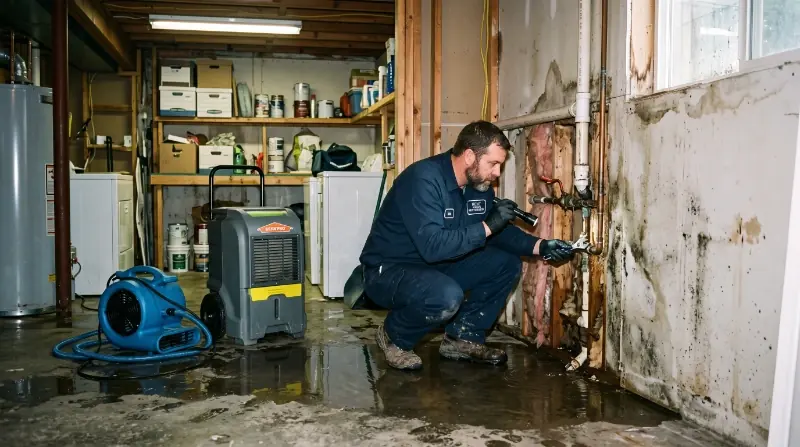
Which Pipes Freeze First in Kent, WA Homes?
Not all pipes are equally vulnerable. In Kent homes, freeze risk depends on pipe location, pipe material, and how well the surrounding space is insulated.
Crawlspace supply lines — highest risk
Supply lines running through unheated crawlspaces in Kent homes are the most common freeze point. The crawlspace sits directly above cold soil and is vented to outside air. Galvanized steel lines in pre-1975 homes are at elevated risk because corrosion has already thinned the pipe wall — less material to absorb expansion stress before failure.
Exterior wall pipe runs — moderate risk
Supply lines running inside exterior walls without insulation between the pipe and the sheathing can freeze in sustained cold. Common in Kent homes built before 1980, where wall insulation standards were lower and pipe routing often followed the path of least resistance rather than thermal protection.
Garage supply lines and hose bibs — moderate risk
Pipes entering through or running along unheated garage walls freeze readily. Outdoor hose bibs that were not shut off and drained before winter are a classic Kent freeze source — the exterior portion freezes and the crack propagates back into the wall.
CPVC and PEX in cold spaces — elevated material risk
CPVC is more brittle at low temperatures than copper or galvanized, making it more prone to cracking under freeze-expansion stress. PEX is the most freeze-resistant of common pipe materials — it can expand during freezing without immediately cracking — but fitting failure at joints during thaw is still a risk.
What Happens When a Frozen Pipe Bursts — and What to Do
A frozen pipe burst does not always announce itself with a flood. Many Kent homeowners discover the burst only when temperatures rise and the ice plug thaws — releasing a full pipe flow from a crack that formed hours earlier during the freeze.
Shut off the main water supply immediately
The main shutoff is at the water meter near the property line or in the garage. Turn clockwise until fully closed. Do this before attempting to thaw any pipe — if the pipe has already cracked, thawing without a shutoff results in immediate high-volume discharge.
Do not apply direct heat to a frozen pipe
Open flame (propane torch), heat gun, or electric heater applied directly to a frozen pipe creates thermal shock that can crack the pipe wall even before it thaws. If the pipe is already cracked, this accelerates failure. Gradual ambient warming is the only safe method.
Call WA Restore Pro — (831) 230-1431
We respond within 60 minutes and coordinate a licensed WA plumber to assess and repair the pipe while we begin extraction and moisture mapping. Frozen pipe bursts in crawlspaces require submersible pumps if water has pooled — the contractor brings them on the first response.
Document before cleanup
Photograph all standing water, the affected pipe location, and any visible crack before cleanup begins. These images are your insurance documentation for the sudden and accidental loss claim.
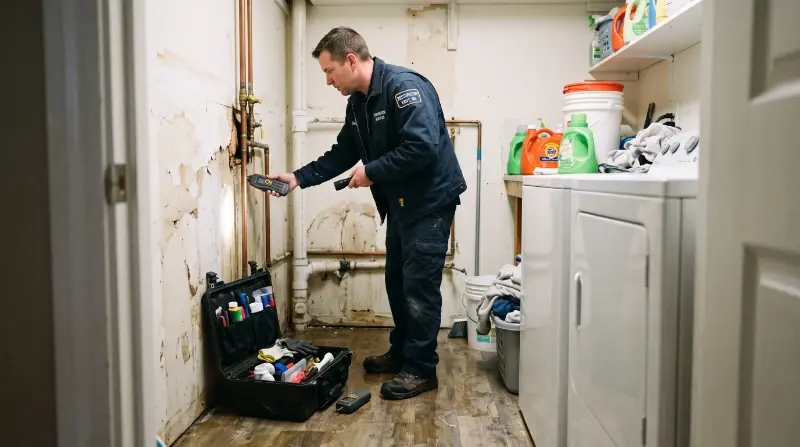
Which Kent neighborhoods have the most frozen pipe risk?
Crawlspace homes on the valley floor. Cold air pooling in the low-lying valley accelerates overnight freeze. Older galvanized supply lines in crawlspaces compound the risk. Also the highest flood risk from Green River releases — see Howard Hanson Dam flooding guide.
Elevated terrain with more wind exposure. 1968–1985 homes with galvanized crawlspace lines and minimal wall insulation. Freeze-thaw cycling common during winter.
West Hill (ZIP 98032) — Moderate riskBluff exposure increases wind chill on exterior walls. Older homes on the bluff have minimal wall insulation and crawlspace galvanized lines at freeze risk.
Panther Lake & Lake Meridian (98031 & 98042) — Lower riskHigher elevation with better insulated 1975–2000 homes. CPVC brittleness at low temps is the primary risk — CPVC in cold crawlspaces can crack under freeze stress even without full freezing.
Frozen Pipe Burst FAQs — Kent, WA
Does a frozen pipe always burst in Kent, WA?
No — a frozen pipe can thaw without bursting if discovered quickly and warmed gradually. The burst happens when ice expansion exceeds the pipe wall's ability to flex, or when rapid thaw releases pressure through a crack that formed during the freeze. Galvanized pipes in Kent homes are at higher burst risk because corrosion has already thinned the wall.
Does insurance cover frozen pipe bursts in Kent, WA?
Yes. A frozen pipe burst is a sudden and accidental loss covered under standard homeowner policies. The water damage restoration is covered beyond your deductible. Coverage can be denied if the home was left unheated (vacant in winter), but occupied Kent homes with adequate heating qualify. We document the freeze timeline and pipe location for your adjuster.
How do I prevent frozen pipes in my Kent, WA home?
Insulate exposed crawlspace supply lines with foam pipe insulation — it does not prevent freezing but significantly extends the time before a pipe reaches freeze temperature. Keep cabinet doors open under sinks on exterior walls during cold snaps. Shut off and drain outdoor hose bibs before December. For vacant or second homes, keep heat at minimum 55°F or have the water shut off and lines blown out.
What temperature causes pipes to freeze in Kent, WA?
Pipes in unheated spaces begin to freeze when ambient temperature drops below 28°F for sustained periods. Kent regularly sees overnight lows below 28°F in December through February. Pipes in heated interior walls rarely freeze, but those in unheated crawlspaces, garages, or along exterior walls without insulation are vulnerable at these temperatures.
Frozen Pipe Burst in Kent Right Now?
60-minute response across all Kent ZIP codes — 98030, 98031, 98032, 98042. Do not apply heat before calling.
(831) 230-1431