Burst Pipe Restoration on West Hill in Kent, WA
Last updated: October 2026
Bluff homes with crawlspace flooding, hillside drainage pressure, and tree-root failures in aging clay sewer lines. When a pipe fails on the slope, water moves fast.
On-site in 60 minutes. ZIP code 98032.
What do I need to know first?
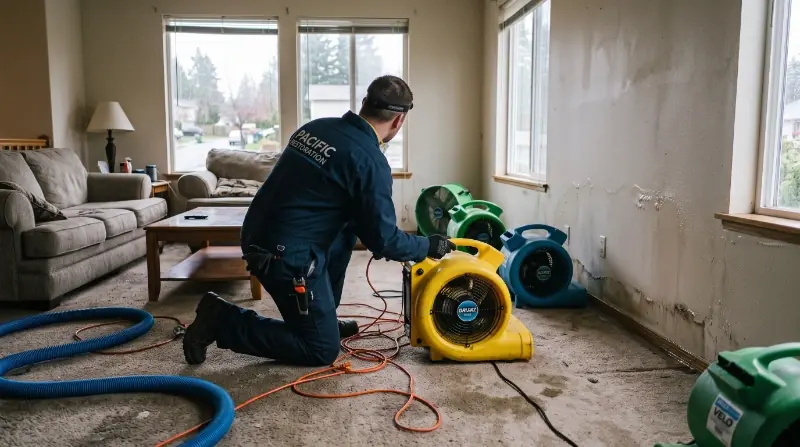
Burst pipe restoration on West Hill in Kent, WA addresses crawlspace flooding, tree-root sewer failures in aging clay lines, supply line failures in homes built between 1970 and 1990, and hillside drainage that routes water against foundations during heavy rain. West Hill sits on a bluff between the Kent Valley and the Des Moines and Federal Way borders, and the sloped terrain means water moves fast when something goes wrong. We serve ZIP code 98032 with 60-minute response time, 24/7.
What makes West Hill different from the rest of Kent?
West Hill is the elevated bluff on the west side of Kent, running from the hillside neighborhoods above West Valley Highway up toward the city borders with Des Moines and Federal Way. The terrain here is fundamentally different from the valley floor, and the water damage patterns reflect that.
Valley-floor homes deal with high water tables and groundwater pushing up from below. West Hill homes deal with water moving downhill, fast. When a pipe bursts or a supply line fails on the bluff, water follows slope. A failure in a second-floor bathroom does not just saturate the first floor. It runs along the slope of the foundation and can appear in the crawlspace, in the garage, and in lower rooms well before anyone tracks down the source.
Crawlspaces on the Bluff
Most West Hill homes sit on crawlspace foundations, not slab. The crawlspaces in these homes are often ventilated and frequently exposed to groundwater intrusion during heavy winter rain because the hillside terrain channels water directly against the uphill foundation wall. Even without a pipe failure, these crawlspaces run damp from October through April.
When a pipe fails in a West Hill crawlspace, the water has an unobstructed path to cover the entire crawlspace floor quickly. Contractors in our network bring submersible pumps sized for crawlspace use on every West Hill dispatch, because standard truck-mounted extraction equipment cannot always reach into tight, sloped crawlspace configurations.
Tree Roots and Aging Clay Sewer Lines
West Hill has some of the oldest mature trees in Kent. Douglas fir, big-leaf maple, and established ornamentals in these yards have root systems that extend well beyond the tree canopy. Older homes on West Hill were connected to the city sewer system through clay tile pipe, which was standard practice before the 1980s. Clay pipe joints are vulnerable to root intrusion, and mature root systems find those joints reliably.
A sewer line that has been infiltrated by roots does not fail with a dramatic burst. It fails gradually: slow drains at first, then intermittent gurgling from floor drains, then eventually a sewage backup through the lowest drain in the house. By the time a homeowner calls about a sewage backup in a West Hill bathroom, the sewer line may have been compromised for years. The restoration from a sewage backup is categorically different from clean water pipe restoration because of contamination protocols required under the IICRC S500 standard.
Supply Line Failures in West Hill's 1970s and 1980s Homes
The residential development on West Hill accelerated in the 1970s and 1980s as land on the bluff was subdivided and built out. Homes from this period carry the same aging plumbing materials as East Hill homes from the same era: galvanized steel in the oldest houses, copper in the middle era, and CPVC in homes built from the late 1970s onward.
Supply line failures at angle stops under sinks and behind toilets are the most common burst pipe call we receive from West Hill. The angle stops in 45-year-old homes have not been serviced or replaced. The supply lines connecting the angle stop to the fixture are often braided polymer lines from the original installation. Both the valve and the line can fail, and when they do in a home on a slope, the water moves quickly toward the lowest point.
What burst pipe scenarios are most common on West Hill?
The Crawlspace Flood After a Supply Line Fails
A copper supply line fails in a first-floor bathroom wall of a 1978 West Hill house. The homeowner is at work. The water runs for four hours through the wall cavity, into the subfloor, and through a gap at the mudsill into the crawlspace below. The crawlspace fills partially. The subfloor above the crawlspace is saturated across most of the first floor. The bathroom tile shows no visible damage. The floor feels slightly soft in one spot near the toilet.
The Hillside Drainage Backup Into the Crawlspace
Heavy rain during an atmospheric river event in January routes surface water along the uphill foundation wall of a West Hill home and into the crawlspace through a foundation crack. No pipe failed. But the crawlspace now holds standing water, the insulation under the floor is wet, and the subfloor is beginning to show elevated moisture readings. This is a water intrusion event, not a burst pipe event, but it causes the same type of damage and requires the same IICRC S500 drying process.
The Sewage Backup From Root-Invaded Clay
A West Hill homeowner calls because the laundry room floor drain is backing up. The crew arrives and discovers sewage is flowing back into the lowest drain in the house. A tree root has infiltrated the clay sewer line in the side yard. The cleanup requires full Category 3 sewage protocols including proper PPE, antimicrobial treatment, and removal of any porous materials that contacted the sewage. This is not a job for bleach and a mop.
West Hill burst pipe questions
What are the most common burst pipe problems on West Hill in Kent, WA?
West Hill homes most often experience crawlspace flooding from groundwater and pipe failures, tree-root infiltration into aging clay sewer lines, supply line failures at angle stops in homes built between 1970 and 1990, and hillside drainage routing rainwater against foundations during heavy rain events. The bluff terrain means water moves quickly when it goes wrong.
How fast can you respond to a burst pipe on West Hill in Kent?
We respond to West Hill homes in 98032 within 60 minutes, 24 hours a day. Contractors in our network bring crawlspace-specific equipment on every emergency dispatch to West Hill addresses because the terrain and foundation types here require different tools than valley-floor homes.
My West Hill crawlspace floods every winter. Is that a plumbing problem or a drainage problem?
Recurring crawlspace flooding without a pipe failure is a drainage and foundation problem, not a burst pipe problem. The source is typically groundwater entering through the foundation, inadequate crawlspace drainage, or surface water routing toward the house from the uphill side. You need a drainage contractor or foundation specialist to address the source. If the crawlspace has standing water right now, we can extract it and begin drying the subfloor while you arrange for the permanent drainage solution.
What is the difference between clean water restoration and sewage backup restoration on West Hill?
A burst supply line delivers Category 1 clean water. Sewage backup is Category 3 black water under the IICRC S500 classification system. Category 3 restoration requires full personal protective equipment for technicians, antimicrobial treatment of all affected surfaces, and removal of any porous materials that contacted the sewage including drywall, insulation, and flooring. The scope of work and cost is significantly greater for a sewage backup than for a clean water pipe failure.
Related Pages
What related services and nearby neighborhoods should I look at?
Burst Pipe in Kent Right Now?
Your call routes directly to a licensed local contractor. On-site in 60 minutes across all Kent ZIP codes.
(831) 230-14311819 Central Ave S, Kent, WA 98032 · Serving 98030 · 98031 · 98032 · 98042 · Work performed by licensed, insured, IICRC-certified contractors